Ecosystems are the planet’s lifeblood, weaving together living and non-living elements into intricate systems that sustain life. They are dynamic communities where living organisms interact with each other and their environment, creating a delicate balance that supports everything from the air we breathe to the food we eat. For beginners, ecosystems might seem complex, but they’re fundamentally about connections—between plants, animals, water, air, and soil. This guide will explore what ecosystems are, their biotic and abiotic components, how they regulate critical systems like climate, water, and food, and why they sometimes get destroyed. By understanding these dynamics, we can make sustainable choices to protect the planet’s balance.
What Are Ecosystems?
An ecosystem is a community of living organisms interacting with their physical environment, creating a self-regulating system. The coral reef clawing with small fishes, algae, and currents, or a dense forest buzzing with flowing river streams, birds and insect. Ecosystems can be vast, like the Sahara Desert, or tiny, like a puddle hosting microscopic life. What unites them is their ability to cycle energy and resources, ensuring life thrives in balance. When ecosystems function well, they provide clean air, water, and food, but disruptions can destabilize this harmony, affecting both local environments and global systems.
Biotic and Abiotic Components: The Ecosystem’s Building Blocks
Ecosystems rely on two core components: biotic (living) and abiotic (non-living), which work together like pieces of a puzzle.

Biotic Components: Life in Action
Biotic components are the living organisms that drive an ecosystem’s energy flow:
- Producers: Plants, algae, and certain bacteria that convert sunlight into energy via photosynthesis. For example, mangroves in coastal ecosystems produce energy that feeds fish and crustaceans.
- Consumers: Herbivores (animal that eat plants), carnivores (animal that eat animal), and Omnivores (that eat both) transfer their energy through food web as per 10% law, which maintain population balance.
- Decomposers: Fungi, bacteria, and critters like beetles break down dead matter, recycling nutrients back into the soil for plants to use. In a grassland, decomposers ensure nutrients from dead grass fuel new growth.
Each organism has a niche, like pollinators enabling plant reproduction or predators controlling prey populations, keeping ecosystems stable.
Abiotic Components: The Environmental Stage
Abiotic components are the non-living factors that shape an ecosystem:
- Sunlight: Powers photosynthesis and influences temperature. Tropical ecosystems get intense sunlight, supporting lush rainforests, while Arctic ecosystems adapt to limited light.
- Water: Determines which species survive. Wetlands are home to moisture-loving plants such as cattails, whereas deserts sustain cacti that thrive in dry conditions.
- Air: Supplies oxygen and carbon dioxide, with wind dispersing seeds or pollutants.
- Soil: Provides nutrients and anchors plants. Fertile loam supports farmland, while sandy soils shape desert ecosystems.
- Climate: Temperature and weather patterns dictate biodiversity. Warm, wet climates foster rainforests, while cold tundra’s support sparse vegetation.
Dynamic equilibrium arises from the continuous interaction of organisms with their physical environment. If rainfall drops, plants may die, affecting herbivores and the entire food chain, showing how tightly ecosystems are linked.
How Ecosystems Regulate the Planet
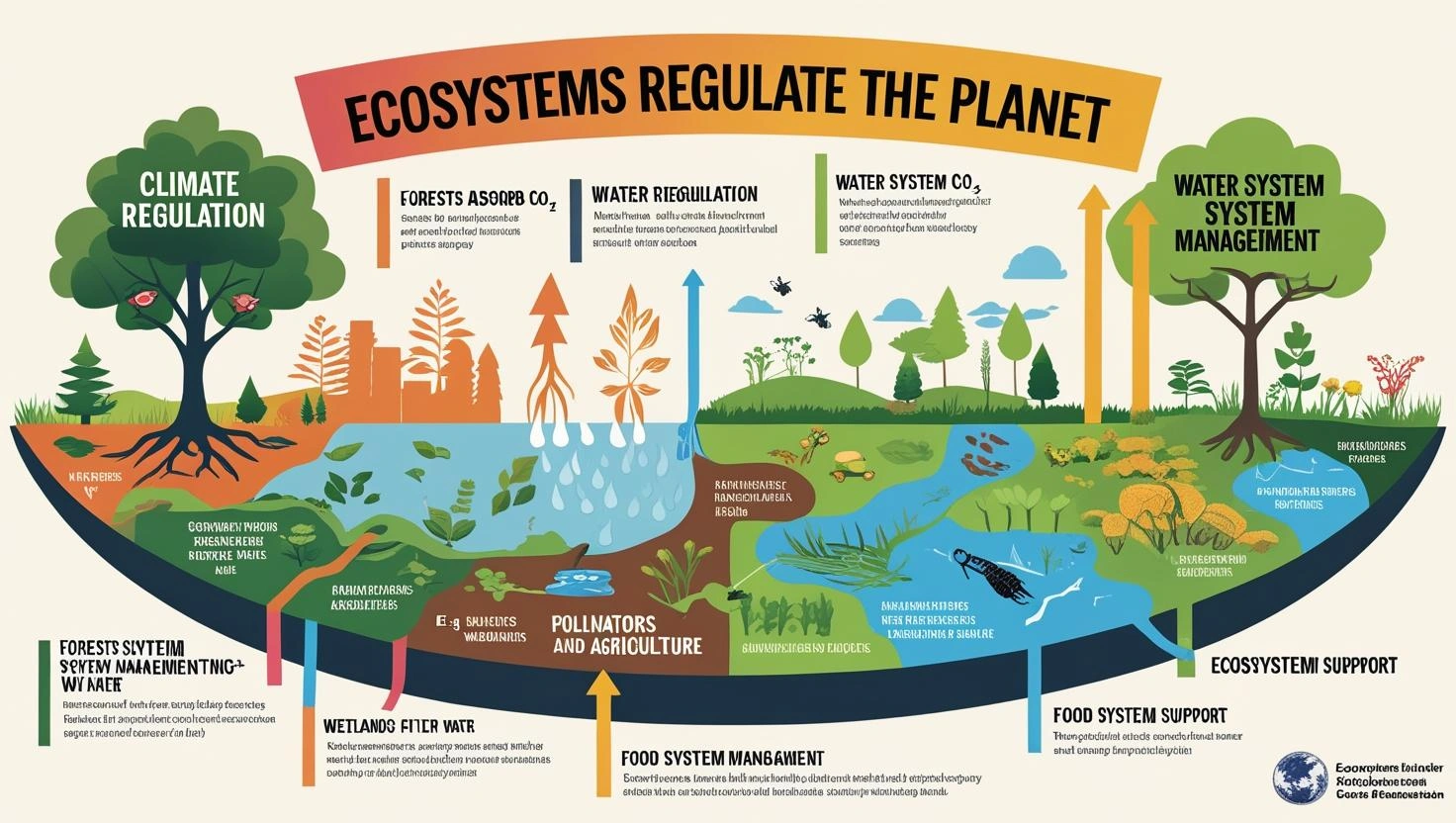
Ecosystems are Earth’s natural regulators, maintaining the systems we depend on: climate, water, and food.
Regulating Climate
Ecosystems stabilize the climate in remarkable ways:
- Carbon Storage: Forests, peatlands, and oceans absorb CO2, mitigating climate change. By locking away billions of tons of carbon, the Congo Basin rainforest plays a crucial role in moderating Earth’s climate.
- Oxygen Production: Photosynthetic organisms like phytoplankton in oceans produce over half the world’s oxygen, supporting life across the planet.
- Local Cooling: Vegetation releases water vapor through transpiration, cooling the air. In contrast to concrete-heavy parts of the city, green spaces can offer a cooling effect of up to 5°C.
When ecosystems like forests are destroyed, stored carbon is released, accelerating global warming and disrupting climate patterns.
Managing Water Systems
Ecosystems ensure water is clean and available:
- Purification: Wetlands filter pollutants, providing clean water. The Pantanal in South America purifies water for millions while supporting diverse wildlife.
- Water Cycling: Forests and grasslands regulate water flow, reducing flood risks. Tree roots absorb rainfall, releasing it slowly to prevent droughts.
- Erosion Control: Coastal ecosystems like mangroves stabilize shorelines, protecting against storms and erosion.
Degraded ecosystems, like drained wetlands, lead to polluted water and increased flooding, threatening communities and wildlife.
Supporting Food Systems
Ecosystems underpin global food production:
- Pollination: Insects like bees pollinate 75% of global crops, such as fruits, vegetables, and nuts, which add $577 billion each year to global food economies.
- Soil Health: Decomposers enrich soil, supporting robust crop yields. Midwestern U.S. farmlands, with their healthy soils, are major producers of corn and wheat.
- Natural Pest Control: Predators like ladybugs and birds reduce crop-damaging pests, minimizing pesticide use.
When ecosystems are disrupted, pollination declines, soils degrade, and pest populations surge, jeopardizing food security.
Why Do Ecosystems Get Destroyed?
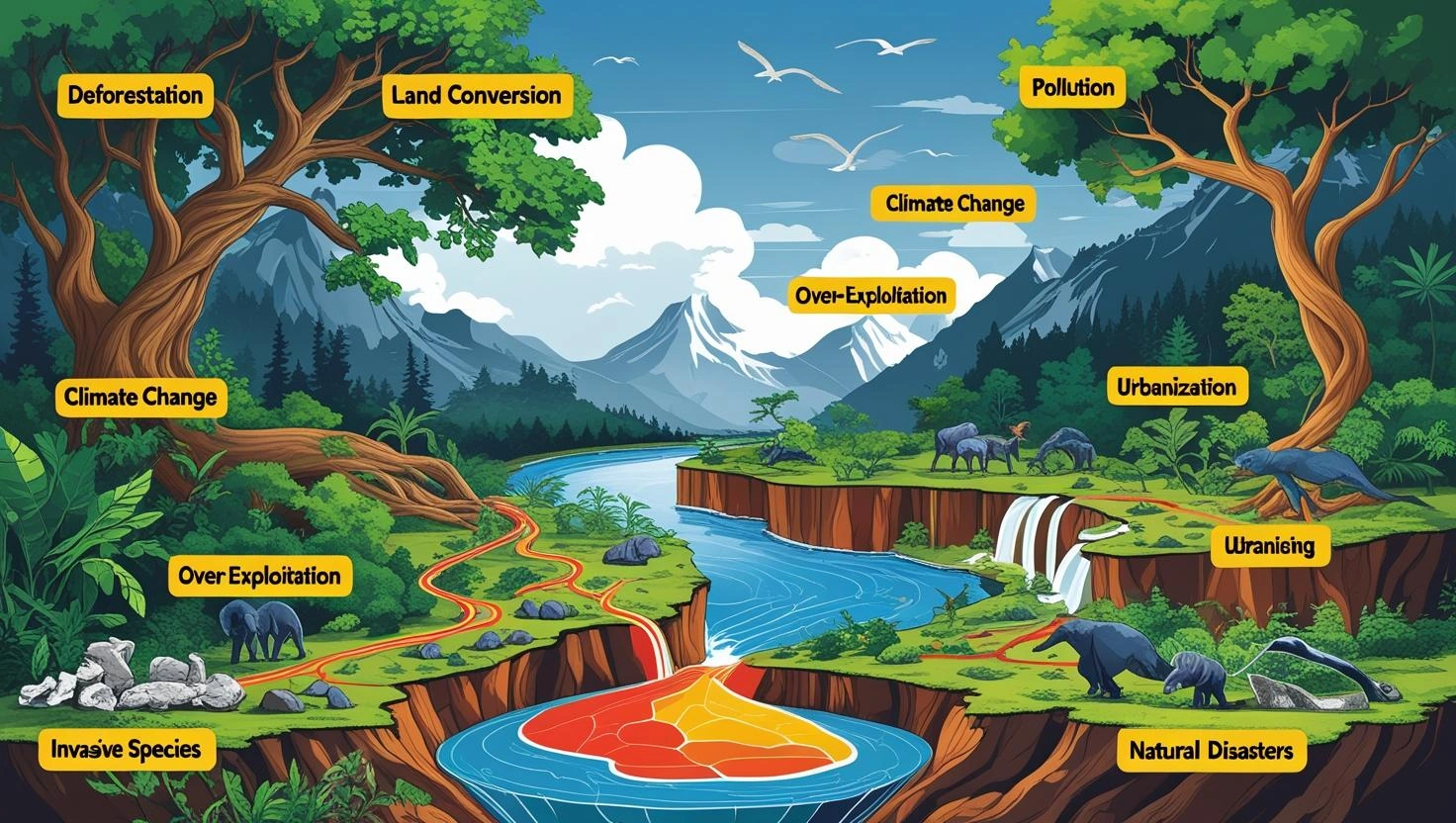
Despite their importance, ecosystems face growing threats from human activities and natural changes, leading to their destruction or degradation. Here are the primary reasons:
- Deforestation and Land Conversion: Forests are cleared for agriculture, urban development, or logging. For example, the Amazon has lost 20% of its area since 1970, primarily for cattle ranching and soy farming, disrupting carbon storage and biodiversity.
- Pollution: Chemicals from industry, agriculture, and waste contaminate air, water, and soil. Plastic pollution in oceans kills marine life, while pesticides harm pollinators like bees, weakening food chains.
- Climate Change: Rising temperatures, altered rainfall, and extreme weather damage ecosystems. Coral reefs, like the Great Barrier Reef, suffer bleaching from warming oceans, losing biodiversity and disrupting marine food webs.
- Overexploitation: Overfishing, hunting, and harvesting deplete species faster than they can recover. Atlantic cod populations collapsed due to overfishing, affecting coastal ecosystems and economies.
- Invasive Species: Non-native species introduced by human activity outcompete local organisms. In Australia, invasive rabbits destroy vegetation, degrading ecosystems and threatening native wildlife.
- Urbanization: Expanding cities replace ecosystems with infrastructure. Wetlands are drained for housing, reducing water filtration and flood protection.
- Natural Disasters: While natural, events like wildfires or hurricanes can destroy ecosystems, especially when intensified by human-induced climate change. An example is Australia’s bushfires in 2019–2020, which devastated 19 million hectares of ecosystems.
Ecosystem destruction has cascading effects. Deforestation releases stored carbon, worsening climate change. Polluted rivers harm aquatic life and human health. Overexploited fisheries collapse, threatening food security. These disruptions destabilize the planet’s balance, making ecosystem protection urgent.
Inspiring Sustainable Choices
Ecosystems provide invaluable services—clean air, water, food, and climate stability—that we can’t replicate artificially. Their destruction threatens not just wildlife but human survival. Fortunately, sustainable choices can help:
- Reduce Waste: Minimize plastic use and recycle to curb pollution. Recycling one ton of plastic saves 1,000-2,000 gallons of water and reduces ecosystem strain.
- Choose Sustainable Food: Support organic farming and plant-based diets to reduce deforestation and pesticide use. Buying local cuts transport emissions.
- Conserve Resources: Shorter showers and LED bulbs reduce pressure of water and energy on ecosystem respectively.
- Plant Native Species: Create pollinator-friendly gardens with native plants to support local biodiversity.
- Advocate for Change: Support policies protecting ecosystems, like reforestation or marine reserves. Voting for eco-conscious leaders amplifies impact.
- Educate Others: Share knowledge about ecosystems to inspire collective action.
A Call to Action
Ecosystems are the planet’s unsung heroes, balancing climate, water, and food through the interplay of biotic and abiotic components. Their destruction—through deforestation, pollution, climate change, and more—threatens this balance, with ripple effects on human life. Yet, every small action counts. By making sustainable choices, from reducing waste to supporting conservation, we can protect these vital systems. Imagine a future where ecosystems thrive, providing clean air, abundant water, and bountiful food. That future starts with us—let’s act today to keep the planet in balance.
FAQs
What are the wonders of biodiversity?
The wonders of biodiversity include: Ecosystem stability and resilience, Genetic diversity for adaptabilityProvision of ecosystem services (clean air, water, pollination), Food security and agricultural diversity, Medicinal resources and pharmaceuticals, Cultural and recreational value, Climate regulation, Soil health and fertility Biodiversity’s role in carbon sequestration, Aesthetic and intrinsic value of nature
Who discovered the ecosystem?
The concept of ecosystems was developed by British ecologist Arthur Tansley in 1935.
Why are ecosystems important for humans?
Ecosystems are vital for humans—they provide clean air, water, food, medicine, and help regulate climate, making life on Earth possible.
What are the most important ecosystems?
The most important ecosystems include: Forests – absorb carbon, support biodiversity, Oceans – regulate climate, provide oxygen and food, Wetlands – filter water, prevent floods, Grasslands – support pollinators, store carbon, Deserts – host unique life, regulate temperature, Freshwater – supply drinking water, support species, Croplands – feed humanity, shape land use. Each plays a unique role in sustaining life and ecological balance.
What are ecosystem values?
Ecosystem values reflect the importance of nature’s benefits to humans—like clean water, food, climate regulation, and cultural meaning. They include: Use values: direct benefits (e.g. timber, fish), Non-use values: emotional, cultural, or intrinsic worth, Economic values: what people are willing to pay to protect or restore ecosystems. They help guide decisions on conservation and sustainable development.