5 Lessons from Forests: What Old-Growth Trees Teach Us About Resilience
Forests, especially old-growth forests, are more than just collections of trees; they are vibrant, interconnected ecosystems that have thrived for centuries, adapting to challenges with remarkable resilience. These ancient woodlands, with their intricate networks like mycorrhizal fungi, offer profound lessons for sustainable living. By understanding how forests function—how they prevent floods, the types of forests in India, and their broader benefits—we can apply their wisdom to create more resilient, sustainable human systems. This article explores five key lessons from old-growth forests, delving into their ecological roles and practical applications for sustainability.
Lesson 1: Interconnection Fuels Resilience
Old-growth forests are living proof that no organism thrives in isolation. At the heart of their resilience lies the mycorrhizal network, often called the “Wood Wide Web.” This underground system of fungi connects tree roots, allowing them to share nutrients, Hydration and chemical communications about potential hazards like drought or invasive pests. For example, a healthy tree might send nutrients to a struggling sapling, ensuring the forest’s collective survival. This interconnectedness teaches us that sustainability thrives on collaboration. Just as trees rely on fungi, animals, and other plants, human communities can build resilience by fostering cooperative systems. For instance, urban food-sharing networks or community-driven renewable energy projects mirror this principle. By prioritizing interdependence—supporting local farmers, sharing resources, or collaborating on conservation efforts—we can create systems as resilient as a forest’s network.
Lesson 2: Diversity Drives Stability
Old-growth forests are biodiversity hotspots, Teeming with species of all kinds, ranging from giant trees to minuscule fungi. This diversity ensures stability: if one species is affected by disease or climate shifts, others can compensate, maintaining the ecosystem’s balance. In India, for example, the Western Ghats’ tropical rainforests support thousands of plant and animal species, each playing a role in the forest’s resilience. For sustainable living, diversity is equally critical. Monoculture farming, for instance, is vulnerable to pests and soil depletion, while diverse agroforestry systems, inspired by forests, are more resilient and productive. Communities can apply this lesson by diversifying energy sources (solar, wind, and hydro) or supporting varied local economies rather than relying on a single industry. Embracing diversity in agriculture, economies, and even cultural perspectives strengthens our ability to adapt to change.
Lesson 3: Adaptation Is Key to Longevity
Old-growth forests have survived centuries of environmental shifts by adapting. Trees in these ecosystems adjust to changing climates, evolving symbiotic relationships or altering growth patterns. For example, some trees in India’s deciduous forests shed leaves seasonally to conserve water during dry spells, ensuring survival in fluctuating conditions. This adaptability inspires sustainable practices in a world facing climate change. For instance, farmers can adopt forest-inspired techniques like agroforestry, which integrates trees into farmland to improve soil health and reduce erosion. On a broader scale, cities can adapt by designing infrastructure that mimics forests’ flexibility, such as green roofs that manage heat and stormwater. By learning to pivot—like planting drought-resistant crops or retrofitting buildings for energy efficiency—we can emulate forests’ longevity.
Lesson 4: Slow Growth Builds Strength
Old-growth forests take centuries to mature, with trees growing slowly to develop deep roots and sturdy trunks. This gradual development makes them resilient to storms, droughts, and other stressors. The slow growth of India’s teak forests in the Western Ghats, for instance, produces dense, durable wood that has supported local communities for generations. In a fast-paced world, this lesson Inspires a shift toward enduring solutions instead of temporary advantages. Fast fashion, single-use plastics, and rapid urbanization often sacrifice resilience for convenience. Instead, we can adopt forest-inspired practices like slow food movements, which emphasize local, seasonal eating, or circular economies that prioritize repair and reuse. By investing in durable, high-quality systems—whether in infrastructure or daily habits—we build a foundation for lasting resilience.
Lesson 5: Forests Protect and Regenerate
Forests are natural guardians, protecting ecosystems and human communities alike. One of their critical roles is flood prevention. Tree roots anchor the soil, reducing erosion, while their canopies intercept rainfall, slowing its flow to prevent runoff. In India, mangrove forests along the Sundarbans coast act as natural barriers, absorbing storm surges and protecting inland areas from flooding. A single hectare of mangrove forest can reduce wave energy by up to 97%, safeguarding communities from climate-driven disasters. This protective role extends to regeneration. Forests recover from disturbances like fires or storms by reseeding, regrowing, and recycling nutrients through decomposing matter. We can mimic this by protecting natural buffers like wetlands or mangroves in urban planning and adopting regenerative practices, such as composting or restoring degraded land. Putting renewal and protection first enables us to create vibrant, enduring systems.
How Forests Prevent Floods
Forests are nature’s flood-control engineers. Their multi-layered structure—canopy, understory, and roots—works synergistically to manage water. The canopy intercepts up to 30% of rainfall, allowing it to evaporate or trickle down slowly. Through water absorption and soil stabilization, roots act as natural defences against landslides and erosion. In contrast, deforested areas see rapid runoff, leading to floods and soil loss. For example, studies in India’s Himalayan region show that forested watersheds reduce flood risk by up to 60% compared to degraded lands. Mangroves, in particular, are flood-prevention powerhouses. Their dense root systems trap sediment and slow water flow, while their ability to store carbon makes them climate allies. In the Sundarbans, mangroves have saved countless lives by buffering cyclone impacts. Protecting and restoring these ecosystems is a sustainable strategy for flood management, far more effective than concrete barriers alone.
5-Types of Forests in India
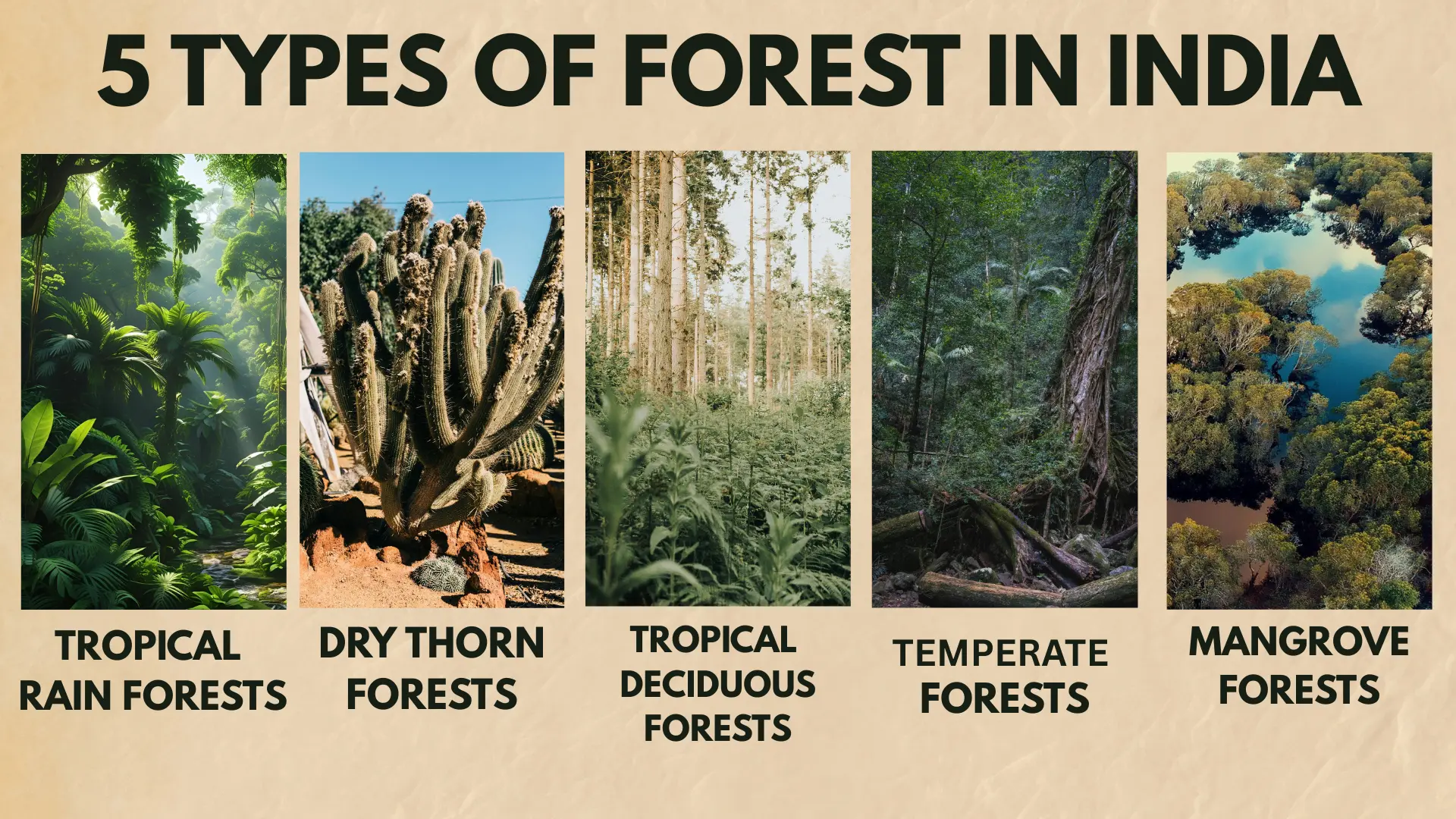
India’s diverse geography hosts a range of forest types, each contributing to ecological and human resilience:
- Tropical Rainforests: Found in the Western Ghats and Northeast India, these biodiverse forests support species like the Malabar giant squirrel and store vast amounts of carbon, aiding climate regulation.
- Tropical Deciduous Forests: Covering central and southern India, these forests (e.g., teak and sal forests) shed leaves seasonally, adapting to dry climates while providing timber and habitat.
- Mangrove Forests: The Sundarbans in West Bengal house the world’s largest mangrove ecosystem, protecting coasts from floods and supporting unique species like the Royal Bengal tiger.
- Temperate Forests: In the Himalayas, coniferous forests like pine and cedar thrive, preventing soil erosion and regulating water flow in critical watersheds.
- Dry Thorn Forests: Found in arid regions like Rajasthan, these hardy ecosystems support drought-resistant species and prevent desertification.
Each forest type demonstrates resilience tailored to its environment, offering lessons for region-specific sustainable practices.
Benefits of Forests
Forests provide a wealth of benefits that underscore their role in sustainability:
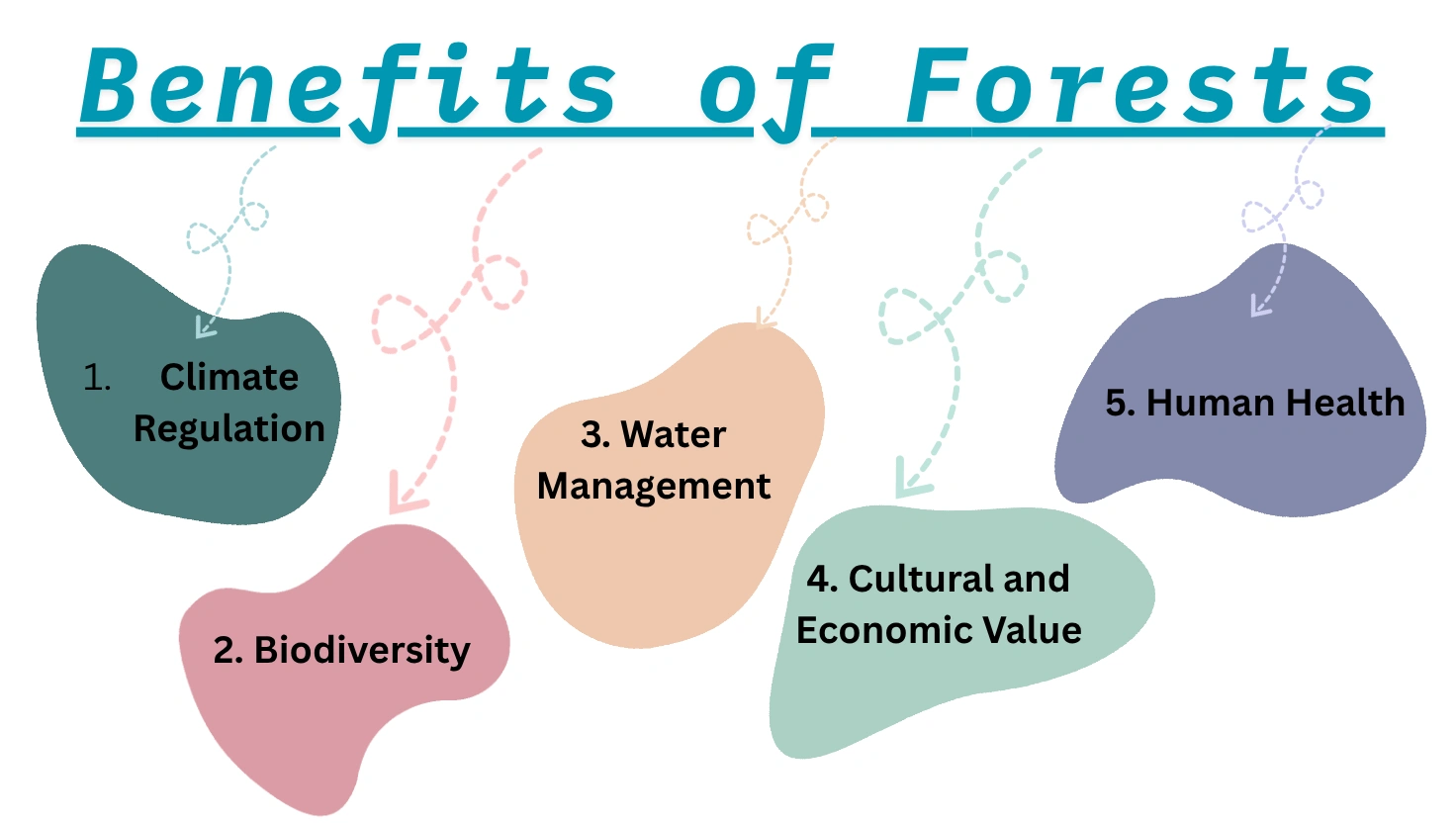
- Climate Regulation: Each year, forests remove 2.6 billion tons of carbon dioxide from the atmosphere. In India, this accounts for about 7% of the country’s emissions being absorbed by its forests.
- Biodiversity: Forests house 80% of terrestrial species, supporting pollination, pest control, and food chains critical for agriculture.
- Water Management: Forests regulate water cycles, ensuring steady river flows and groundwater recharge. The Himalayan forests, for instance, feed rivers like the Ganges.
- Cultural and Economic Value: In India, forests provide livelihoods through timber, non-timber products like honey, and ecotourism, supporting millions of rural communities.
- Human Health: Forests improve air quality, reduce stress, and provide medicinal plants, with 25% of modern medicines derived from forest species.
Applying Forest Wisdom to Sustainable Living
The lessons from old-growth forests can transform how we live. To mimic their interconnectedness, we can support community initiatives like urban farming cooperatives. To embrace diversity, we can diversify crops and energy sources. To adapt, we can invest in climate-resilient infrastructure. To prioritize slow growth, we can choose quality over disposability. And to protect and regenerate, we can restore degraded ecosystems and adopt circular practices.
In India, initiatives like afforestation in the Aravalli hills or mangrove restoration in the Sundarbans show how forest-inspired strategies work. Globally, biomimicry projects, like buildings designed to mimic termite mounds for natural cooling, demonstrate forests’ influence on innovation. By learning from old-growth forests, we can build a future where human systems are as resilient, balanced, and sustainable as nature’s oldest ecosystems.
FAQs About 5 Resilience Lessons from Old-Growth Forests
What are the benefits of old growth forests?
Old-growth forests are powerful carbon sinks, helping fight climate change by storing vast amounts of greenhouse gases. Hey also provide critical habitats for endangered species, preserve biodiversity, and support clean air and water
What is the best use of old growth forests?
The best use of old-growth forests is preservation, allowing them to continue storing carbon, supporting biodiversity, and regulating ecosystems naturally. Logging or development disrupts their delicate balance—protecting them ensures long-term environmental and cultural benefits.
What is the difference between old growth and new growth forests?
Old-growth forests are ancient ecosystems with towering trees, rich biodiversity, and deep carbon storage built over centuries. New-growth forests are younger, fast-growing woodlands that absorb carbon quickly but lack the ecological complexity and stability of older forests.
Where are old growth forests?
Old-growth forests are found across the globe, with the largest areas in Brazil, Canada, and Russia, which together host over half of the world’s remaining primary forests2. You can also find them in places like the Amazon rainforest, Tongass National Forest in Alaska, and Tasmania’s temperate rainforests, each rich in biodiversity and ecological heritage.
Is there a 9000 year old tree?
Yes! Old Tjikko, a Norway spruce in Sweden, is estimated to be over 9,500 years old, making it one of the oldest known living trees on Earth. It survives through clonal regeneration, where its ancient root system continuously sprouts new trunks over millennia.